
Established in 2012, City University (CU) is a Not-For-Profit foundation university located in Mogadishu, Somalia that is pioneering quality instruction, research, and service to society.

CU practices selective admissions through an entrance exam equivalent to an accredited secondary school. Merit scholarships are also given based on student test scores.


Investigating Real Problems, Presenting Practical Solutions for Development
City University Research Institute (CURI) is responsible for guiding and implementing the University’s research portfolio, which is designed to generate knowledge and solutions for local and global challenges. The office is mandated to conduct, facilitate, and support relevant, quality research that contributes to learning, policy, and practice in areas delineat- ed in the City University (CU) research priori- ties. CURI facilitates and supports several initiatives that contribute to achieving CU research goals.
CURI envisions becoming a preeminent leader in quality research productivity in Somalia and the region and pursues interna- tional recognition through excellence and rigorous research standards
The primary mission of CURI is to conduct, build capacity, and support relevant and quality research to achieve the University’s research goal of producing knowledge that contributes to the development of Somalia, the region, and the world. CURI is mandated to develop a culture of research excellence and capacity at City University and beyond.
In line with the City University, the following core values guide CURI’s mission to advance knowledge and address societal challenges:
CURI is expected to fulfill the following activities to pursue the University’s research mission.
● Develop research policies and procedures for the University researchers, students, and other affiliated stakeholders.
● Continuously update research priorities and specific research agendas.
● Undertake research activities in alignment with the CURI’s research priorities and agendas.
● Develop and provide research and knowledge resources and platforms at the university, including research tools, data repositories, and information management tools.
● Strengthen research capacity through training and exchanges for faculty andstudents.
● Systematically manage and facilitate research grants, awards, fellowships, and scholarships.
● Support CU researchers in applying for external grants and bringing them to fruition.
● Facilitate the planning and founding specialized research and training institutes and centers at CU.
● Support the planning and establishment of CU-based academic journals and conference proceedings in selected academic fields.
● Establish a research community of practice to facilitate peer learning, information and data sharing, and collaborations.
● Build partnerships with international, national, and local governments, other academic institutions, and non-governmental organizations to collaborate on
research and development of solutions.
● Plan and organise the university’s annual academic conference.
City University Research Institute (CURI) is responsible for the University’s research portfolio. The research office must conduct, facilitate, and support relevant and quality research that contributes to knowledge, policy, and practice in areas delineated by the CU research priorities.
The Director of CURI heads this office and reports to the Executive Vice President (the provost). A research committee will work closely with the Director. Depending on CU expansion and capacity development, CURI is envisioned to transform into the research branch of the City University under the Vice President for Research and Innovation.

Dr. Abdullahi Barise is the Founding President of the City Uni- versity of Mogadishu and a Member of its Board of Trustees. He is a respected scholar in educational psychology and social work. He received his PhD from McGill University in Canada and has previously taught at McGill University, the University of Regina, and Zayed University. Over a decade ago, he returned to Somalia to help establish the City University of Mogadishu.

Dr. Afyare Elmi is an acting director of CURI and a research professor at the City University of Mogadishu. He is also a research fellow at the Heritage Institute for Policy Studies in Mogadishu. Afyare was previously an Associate Professor at Qatar University’s Gulf Studies Program. In addition to his book, Understanding the Somalia Conflagration: Identity, Political Islam, and Peacebuilding (Pluto Press), he has authored or co-authored over 20 peer-reviewed publications and a dozen policy papers. Dr. Elmi holds a Bachelor of Arts in Public Administration from Ryerson University, a Master of Arts in Political Science from Brock University, a second Master of Arts in Education Policy from the University of Toronto, and a Ph.D. in Political Science from the University of Alberta. He has also provided commentaries and published opinion/edito- rial articles in leading international media outlets.

Dr. Arunachalam Sivakumar is an associate professor of marine biology and fisheries. Sivakumar has over 30 years of experience in marine ecology (mangroves and integrated aquaculture farming), natural resource management, and community development.

Fardowsa Weheliye is a researcher at CURI and lecturer at the Marine Science Department. She has more than five years of experience in fisheries data and project coordination. She is a dedicated member of the WiMs steering committee, representing Somalia. Furthermore, she holds the position of Chairperson at Bahdabaalato Community, concentrating on lifeguard rescue, swimming coaching, and raising awareness about water related hazards. As one of the first female graduates in marine science, Fardowsa obtained her Master’s Degree from Istanbul University, Turkey. Her dedication to enhancing Somali fisheries through improved infrastructure and technology demonstrates her passion for marine science.

Dr. Musicha Shariff is a researcher and senior lecturer at the City University of Mogadishu, Faculty of Business Administration and Economics. He holds a PhD in Finance and Banking, a Bachelor of Science degree in Economics, an MBA in Finance & Banking, and a postgraduate degree in Education and Islamic Studies. Dr. Shariff has written extensively on Islamic Economics and Finance, the Underground Economy, and Education. He has publications in reputable journals and is actively involved in other research projects.
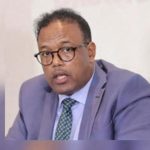
Dr. Abdifatah Ismael Tahir is a political/urban geographer whose work explores the intersections of cities, infrastructure, and political life in Somalia. He is currently a Research Fellow at Hilin, a nonprofit research organisation in Mogadishu. He holds a PhD in Geography from the University of Sussex. He has previously held research positions at the University of Sheffield and the University of Manchester. Alongside his academic research, Dr. Tahir has been directly involved in Somali politics and policy. He served as a member of the Federal Parliament of Somalia, where he chaired the House Committee on Roads, Ports, Airports, Energy, and Transport. His experience as scholar and policymaker positions him uniquely to bridge academic inquiry with policy debates.
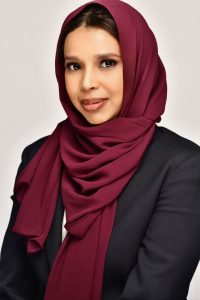
Dr. Maimuna Mohamud is an experienced researcher and development professional. Her research interests include peacebuilding, migration governance, and climate adaptation, and she draws heavily on ethnographic methods and advances Participatory Action Research (PAR) in fragile and conflict-affected societies. Dr Mohamud has more than ten years of experience translating research into actionable, evidence-based policy recommendations. She regularly participates in policy discussions with development partners, including the UK Foreign, Commonwealth and Development Office and several UN agencies. Her interests also include knowledge sharing and collaboration with universities, government institutions, and civil society groups in the Global South. Recently, she managed Harvard University-funded research on the role of indigenous knowledge in climate change action, particularly in Somalia. She holds a PhD from the University of Cambridge and a Master’s degree from the University of Oxford. Her upcoming manuscript examines the lived experiences of migrants, particularly “Red Sea refugees” from Sudan, Yemen, and Somalia, highlighting the unique challenges they face in non- European, illiberal asylum regimes in the Middle East and North Africa.

Yasin Mohamed Ibrahim is a researcher at CURI and lecturer at the Agricultural Science Department. He conducts a wide range of multidisciplinary research using quantitative, qualitative, and mixed methods. Yasin possesses robust expertise in Agriculture and related fields, such as irrigation, food security, water resourc- es, and climate change. He obtained his Master’s degree in Agri- cultural Structure and Irrigation from Akdeniz University and holds a Bachelor’s degree in Agriculture Science from the City University of Mogadishu.

Mohamed Muhudin Ali is a researcher at CURI and a lecturer at Civil Engineering Department. He employs an interdisciplin- ary approach combining quantitative, qualitative, and mixed methods. With an MSc in Environmental Science & Manage- ment from Stamford University in Bangladesh and a BSc in Civil Engineering from City University in Mogadishu, Somalia. his academic interests mainly involve studying environmental degradation and examining climate adaptation strategies, focusing on resilience and sustainable development.

Ahmed Abdirahman Ahmed is a research fellow at CURI. He conducts experimental research, review articles, and teaches courses in food science and technology, agricultural microbiol- ogy, and chemistry. Ahmed specializes in food engineering and possesses comprehensive knowledge and skills in food process- ing, preservation, quality control, and safety. He obtained his bachelor’s degree in agriculture from the City University of Mogadishu and completed his master’s at Bursa Technical Uni- versity in Turkey, specializing in food engineering.

Mohamed Ali Kahie serves as the coordinator of the Depart- ment of Agriculture at the City University of Mogadishu. He is also a senior researcher at the same university. His expertise is in agriculture, specifically in plant breeding and genetics, plant pathology, plant physiology, and agronomy. He earned his Mas- ter’s in crop breeding and genetics from Fujian Agriculture and Forestry University and his Bachelor’s in agronomy from Huazhong Agricultural University in China.

Mrs. Rahima Abass Ali lectures in the Department of Banking and Finance concentration courses. Mrs. Rahima has more than seven years of experience in banking finance and business administration.
City University has developed basic research policies, procedures, and forms that guide CURI researchers. For instance, the University has an ethics policy. CURI researchers and affiliates must comply with the University’s research and ethics policy.
Below are initial themes deemed priority research areas that are envisioned to produce knowledge that could meaningfully contribute to Somalia’s development. CURI is expected to further develop and refine these themes. In the long run, the research branch is expected to help each department develop its research agenda in line with the overarching CU research priorities, culminating in a unified CU research agenda.
6.1. Conflict, Peacebuilding, and Governance
a. Reconciliation
b. Conflict resolution mechanisms (modern, traditional, and Islamic)
c. Constitutional development
d. Transitional justice
e. Decentralization
f. National and local elections
g. Local governance development
h. Corruption
i. Resource conflicts
j. Counter-piracy
k. Violent Extremism
l. Security Sector Reform
m. Re-building the national army
n. Disarmament, Demobilization and Re-Integration
6.2. Resources
a. Natural Resources (oil, gas, and minerals)
b. Livestock, agriculture, and marine fisheries.
c. Water resources
d. Resource governance
e. Illegal fishing and toxic waste dumping
6.3. Education
a. Access to education
b. Teacher training
c. Educating and empowering minorities
d. Gender education
e. Peace education
f. Quality of education
g. K-12
h. Higher education
6.4. Health
6.5. Economic Development
a. Poverty alleviation
b. Monetary policy
c. Entrepreneurship
iv. d. Infrastructure
v. e. Transportation regulation
6.6. Social Development
a. Identity
b. Gender issues
c. Crime issues
d. Youth development
e. Family issues
f. Marriage and divorce
g. Family dynamics and relationships
h. Family conflicts and their resolutions
i. Family strengths and coping mechanisms
Arunachalam Sivakumar.
1. Abdi, M. H. S., Seidu, I., Bajpai, M., & Sivakumar, A. (2025). Aquaculture for food security and
climate resilience in Somalia: Opportunities, challenges, adaptive pathways and policy
recommendations. Bioresource Technology Reports, 102480.
2. Gajali, G., & Saida, S. (2025). Response of Growth and Yield of Cucumber (Cucumis sativus L.)
to NPK Fertilizer Application and Mulch Treatment. AGROGENESIS Journal of Sustainable
Agriculture and Innovation, 1(1), 86-99.
Mohamed Muhudin Ali,
1. Ali, M. M. (2023). Assessing the Impacts of Traditional Charcoal Production Sites on the Environment in Daynile District, Mogadishu-
Somalia. American Journal of Environment and Climate, 2(3), 131-139.
https://doi.org/10.54536/ajec.v2i3.2264.
Yasin Mohamed Ibrahim
1. Ibrahim, Y. M., & Hashi, M. F. (2026). Spatiotemporal Trends of Precipitation Analysis in Riverine
Agriculture Area of Shabelle River Using Mann–Kendall Family and Innovative Trend Analysis.
Advances in Meteorology, 2026(1), 7484484.
2. Warsame, S. A., Ahmed, A. A., Ibrahim, Y. M., Ahmed, M. H., & Kahie, M. A. (2026). Assessment
of Different Irrigation Levels on Carrots Under Semi‐Arid Climate Conditions Using a Pot
Experiment. Irrigation and Drainage.
3. Ibrahim, Y. M. (2025). Urban Agriculture in Mogadishu: Opportunities and Constraints. Turkish
Journal of Agriculture – Food Science and Technology, 13(4), 849–859.
https://doi.org/10.24925/turjaf.v13i4.849- 859.6256
4. Ibrahim, Y. M., Buyuktas, D., & Karaca, C. (2024). Evaporation and transpiration components of
crop evapotranspiration and growth parameters of lettuce grown under greenhouse conditions.
Journal of Irrigation and Drainage Engineering, 150(5), 05024002.
5. Ibrahim, Y. M. (2023). Estimation of Crop Water Requirement for Tomato Plant in Afgoye-
Somalia, Using CROPWAT 8.0 Model. Black Sea Journal of Agriculture, 6(6), 664-670.
https://doi.org/10.47115/bsagriculture.1340670. Recently published water resource
management and food security related paper
6. Ibrahim, Y. M., Karaca, C., & Büyüktaş, D. (2020). Water resource and irrigation in Somalia:
AReview. Current Researches in Agriculture Forest and Aquaculture Science. Duvar Publishing,
Ankara, Türkiye, page 35-53.
Ahmed Abdirahman Ahmed
1. Ahmed, A. A. (2023). Application of ultrasound on meat tenderization:
A review. Journal of Raw Materials to Processed Foods, 4(2).
https://doi.org/10.57251/jrpfoods.2023.9.
Musicha Nyongesa Sharif
1. Sharif N. M. (2023) The Islamic Economic System: A Remedy Model
for Economic Downturns (The Covid-19 Pandemic as Case Study) I:
https://doi.org/10.55248/gengpi.4.623.45219.
Mohamed Ali Kahie
1. Kahie, M. A., Wang, Y., Fang, P., Qi, J., Lei, R., Xu, J., … & Tao, A.(2023). Evolution and expression analysis of the caffeoyl-CoA 3-O-
methyltransferase (CCoAOMT) gene family in jute (Corchorus L.). BMC
genomics, 24(1), 204. https://doi.org/10.1186/s12864-023-09281-w.
Fardosa Wehliye
1. Abdirahim I.S, Sarah Glaser, Jamal Hassan, Liiban Ise Farah, Fardowsa
Wehliye, 2018. Improving the catch data collection system for Somali
Fisheries: Project Kallun, IOTC, Nov-29 –Dec-1, 2018, Seychelles.
2. Sarah Glaser and Fardowsa Wehliye, 2021
https://www.shackletontrust.org/climate-change-in-somalia.
3. Fardowsa Wehliye, 2023. Somali Balıkçılığı ve Türkiye ile Balıkçılık
İşbirliği, 9th International Student Symposium, Istanbul, Türkiye.
Liban Isse Fara
Based on its mission, CURI aims to maximize the impact of its research byplanning, executing, and evaluating activities that help extend the institute’s discoveries beyond research communities and society at large.
CURI will provide resources and training for CU researchers. It will offer workshops on research methodologies and techniques, research software skills (e.g., SPSS, Nvivo, Atlas. ti), proposal and academic writing, publication skills, and knowledge dissemination. Additionally, CURI will invite experienced researchers to conduct seminars and workshops at CU. CURI will also organize forums for faculty to share their research interests and accomplishments. CURI will additionally offer intensive training courses to junior researchers from outside the university, such as those from research institutes, think tanks, and other universities. These courses will specifically concentrate on the essential principles of research design, including research methodologies and techniques.
Furthermore, CURI will lead the development of relevant and quality library and web resources, research software resources, and online tutorials for CU researchers and research students.
These small grants fund quality faculty research, which can be conducted individually or in small groups. Through CURI, faculty members can apply for this funding every year.
These competitive funds are designed to support a number of selected research projects that can be completed within one year. A qualified research evaluation committee will select the winning projects.
To guide faculty members, CURI will provide:
a. Proposal guidelines
b. Relevant deadlines
c. Proposal evaluation criteria
d. Grant proposal application form
e. Budget guidelines and relevant forms
f. Grant progress and final reporting guidelines
Also, CURI will conduct workshops on the Faculty Research Incentive each year.
CU fellowship initiative supports research that has the potential to make a significant contribution to CU’s research goals and priorities. This fellowship entails either one of the following:
a. A limited number of faculty members are given grants, time release, or teaching reassignment to conduct major research in one of CU’s priority areas.
b. A research fellow from outside CU with expertise in one of CU’s priority areas and a proven track record of scholarly research and publications is commissioned to conduct promising research.
Priority will be given to projects that can be brought to fruition within one year.
CURI will prepare a database of external grant opportunities and help CU faculty and graduate students apply for these competitive grants.
Both undergraduate and graduate students play a pivotal role in the success of CU’s research mission.
a. Undergraduate Students
One of the eight CU learning outcomes is to produce undergraduate students who can plan, conduct, and present findings of significant research projects in their fields. As part of their graduation requirements, all CU students take a statistics course and a research methods course and complete a research project.
Moreover, CURI will further enrich undergraduate student research experience through the undergraduate Research Skills Program. CURI will implement a program to develop undergraduate students’ research skills every year. A selected number of high-achieving students from various degree programs will benefit from this program each year (clear criteria and selection process will be put in place). For each cohort, the programs will run for two years. Priority will be given to students in the last two years of their degree program. This program has two components:
i. First, this group of students will take a 24-hour-long research training course every year. These hours can be spread out throughout the semesters or offered intensively during the summer. Students will learn about:
● Research qualitative and quantitative methods (the complete research
conducting cycle)
● Research software skills
● Research proposal development
● Graduate school admissions and achievement expectations
ii. Second, qualified faculty members will mentor these students to develop
research proposals.
Upon completing this non-credit training program, students will receive a certificate that qualifies them to become research assistants. They are supported to become paid research assistants in faculty-led research projects at CU.
Undergraduate students who do not participate in this program are still allowed to enhance their research skills by working as beginning research assistants in faculty-led projects.
b. Graduate Students
Most CU graduate programs are designed to produce competent researchers. To graduate, students take graduate-level research methods courses and conduct their own independent research.
In addition to the assigned thesis capstone supervisors, CURI will serve as a resource for graduate students and support their mentorship by experienced research faculty. Graduate students will be given priority to work as paid research assistants or collaborate with faculty as co-investigators.
Relevant departments will allow undergraduate and graduate students to present their research findings at the university in collaboration with CURI. Students will also be encouraged to present their research at local or international conferences or publish it in refereed journals when appropriate.
Heritage Institute for Policy Studies Ministry of Fisheries
Iftin Consulting
University of Minnesota
University of Nairobi.
Makerere University.
United States International University (USIU) Ankara Social Sciences University
Africa Foundation (Ankara)

Established in 2012, City University (CU) is a Not-For-Profit foundation university located in Mogadishu, Somalia that is pioneering quality instruction, research, and service to society.
© CITY UNIVERSITY OF MOGADISHU
Fill out the application form below.